Steam vs Dry Carpet Cleaning – Which Is Better for Your Home
Brisbane’s humidity makes carpet cleaning a balancing act: you want deep hygiene without long, damp drying times that invite musty odours or mould. Both hot water extraction (“steam cleaning”) and very low moisture (VLM) “dry” cleaning have clear strengths—the right choice depends on carpet fibre, soiling level, health needs, and how quickly you need rooms back in use.
What Steam Cleaning (Hot Water Extraction) Actually Does
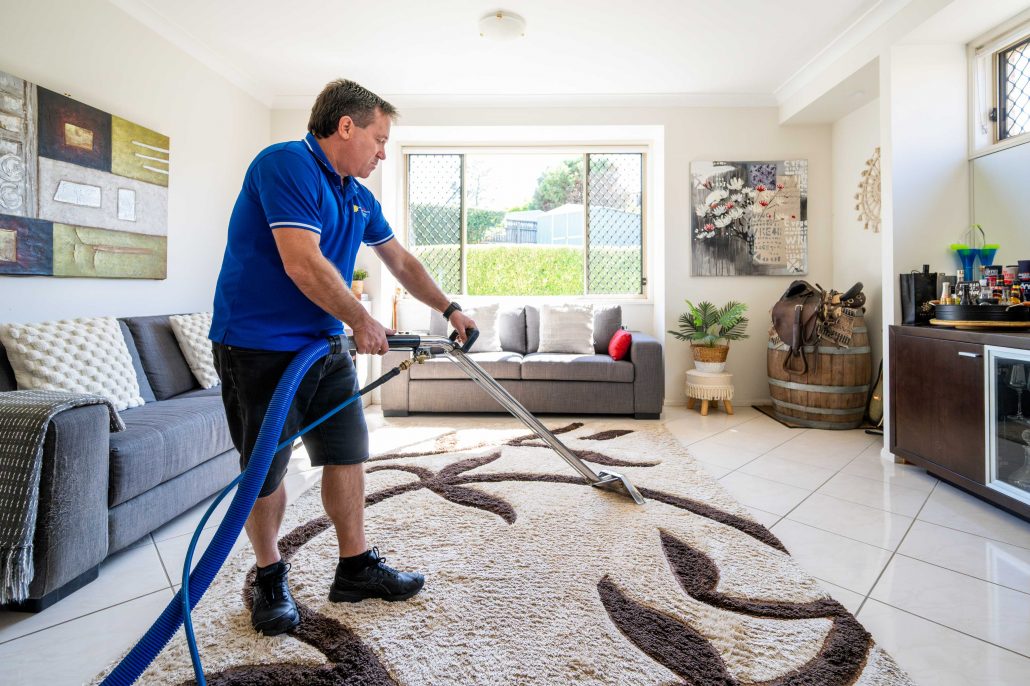
Despite the nickname, the method is a hot water extraction (HWE) process. After pre-vacuuming and targeted pre-sprays, very hot water (typically 65–95°C) mixed with detergent is injected into the pile and immediately extracted with high vacuum. This flushes soils, allergens, and residues from deep in the fibre base and provides a thermal sanitising effect against bacteria and dust mites. A professional sequence usually includes:
- Thorough dry-soil removal (pre-vacuum)
- Fibre-safe pre-sprays and stain treatments
- Hot water extraction rinse
- Grooming to reset pile
- Air movers to accelerate drying
Best for: restorative deep cleans, heavy traffic lanes, allergen control, stubborn spills/odours, bond cleans (often specified by agents).
Watch-outs: more water and longer drying times (typically 6–24 hours in Brisbane) if airflow and extraction aren’t optimised; poor technique risks overwetting.
What Dry Carpet Cleaning (Very Low Moisture) Delivers
“Dry” cleaning uses up to ~90% less water than HWE. The modern gold standard is encapsulation: crystallising polymers are worked into the pile with a rotary or oscillating machine. They detach soil from fibres and encase it; once dry, the brittle residue is removed by normal vacuuming, leaving a non-sticky finish that resists rapid re-soiling. Variants include dry compound and bonnet methods, but encapsulation is preferred for results and fibre safety.
Best for: fast turnaround (dry in 1–2 hours), routine maintenance, commercial spaces, water-sensitive fibres (e.g., sisal, jute, some wool installs).
Watch-outs: it’s a surface-to-mid pile clean—it won’t flush heavy, embedded grit from the backing like HWE can.
Key Differences That Affect Brisbane Homes
- Drying time: VLM wins decisively (1–2 hours) vs HWE (6–24 hours) in humid conditions.
- Cleaning depth: HWE reaches the fibre base and removes deeply seated soils; VLM is excellent for appearance and ongoing maintenance.
- Sanitisation & allergens: HWE’s heat plus extraction gives superior hygiene and allergen reduction; VLM benefits from an added sanitiser step where hygiene is a priority.
- Stain dynamics: HWE tackles set-in stains and odours (with correct chemistry), but can cause wicking if over-wet; VLM lowers wicking risk thanks to low moisture.
- Fibre safety: VLM is safer for water-sensitive natural fibres; HWE is ideal for most synthetics when performed expertly with controlled moisture and strong extraction.
- Environmental impact: VLM conserves water and energy; HWE uses more water but, done right, removes more residue in a single pass.
Which Method Fits Common Scenarios?
- Family homes with kids/pets: Use HWE for the annual deep clean (sanitisation, allergen removal, odour control), supported by VLM touch-ups between visits to avoid long downtimes.
- Bond/end-of-lease: HWE is the safe bet—most Brisbane agents expect “steam cleaning” for final inspection and documentation.
- Commercial/high-traffic areas: VLM for frequent maintenance with minimal disruption, plus periodic HWE after-hours to remove accumulated deep soil and extend carpet life.
- By fibre type:
- Nylon/Polyester/Olefin (synthetics): Either method; HWE for restoration.
- Wool: Prefer VLM as routine; if using HWE, insist on wool-safe chemistry, controlled temps, and high extraction.
- Sisal/Jute/Seagrass/Silk/Viscose: VLM only—avoid flush extraction due to water sensitivity.
Carpet Sanitiser: When It Matters
Brisbane’s humidity favours microbial growth. During HWE, high heat assists sanitisation; adding a professional antimicrobial in the final rinse provides extended protection. With VLM, include a sanitiser application where there’s illness, pet accidents, childcare needs, or mould risk. Use non-toxic, child- and pet-safe products once dry.
Myths Worth Ignoring
- “Steam shrinks carpets.” Rare with professional HWE and modern backings; over-wetting is an operator error, not a method certainty.
- “Dry cleaning just hides dirt.” Outdated bonneting gave that reputation; encapsulation actually detaches, crystallises, and removes soil through subsequent vacuuming.
- “More water/soap = cleaner.” Excess moisture causes wicking/mould; excess detergent attracts dirt. The win is precise chemistry + powerful extraction/absorption.
- “Clean less to protect carpets.” Abrasive grit acts like sandpaper. Regular professional cleaning extends carpet life.
Practical Recommendation
For most Brisbane homes, a hybrid plan works best: HWE once per year (or bi-annually in high-use homes) to reset and sanitise, with VLM maintenance as needed for appearance and quick turnaround. Prioritise IICRC-certified technicians who identify fibres first, explain their process, manage moisture carefully, and use appropriate chemistry and airflow to achieve fast, safe drying. Avoid choosing solely on the cheapest quote—equipment, training, and fibre identification matter more than the method label.
With the right pairing of method to situation—and competent technicians—your carpets will dry quickly, look better for longer, and stay healthier in Brisbane’s challenging climate.